
Category: Sleep & Bedtime | Inner Harmony Haven | Reading time: ~5 min
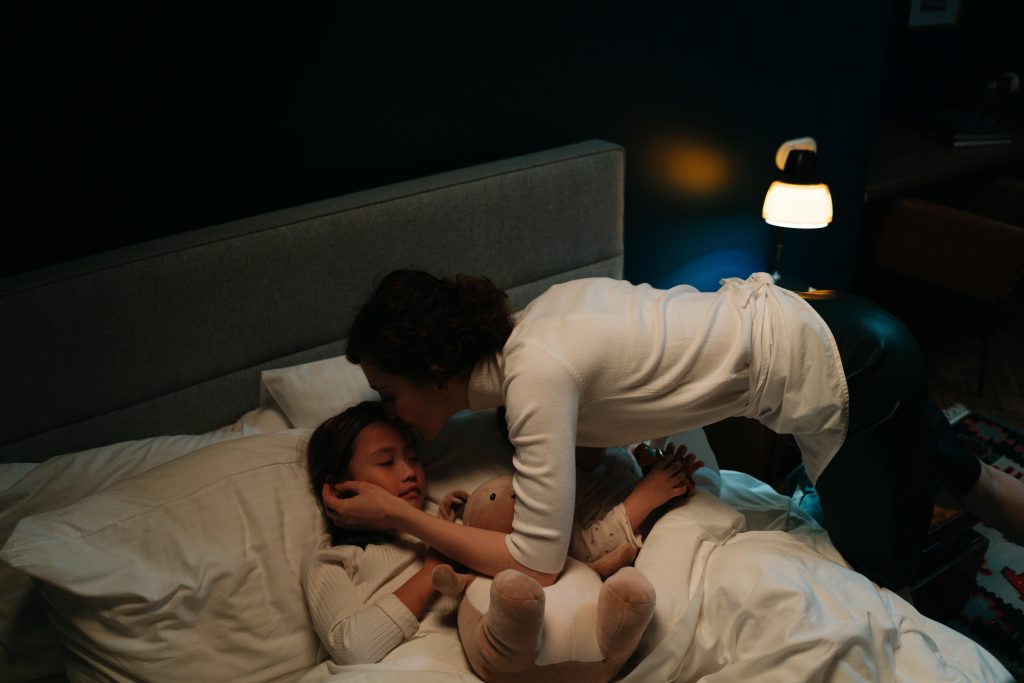
It’s 9:30 pm. The dinner dishes are finally done, the younger ones are in bed, and now you’re standing outside your child’s door for what feels like the fortieth time tonight. The lamp is on. Again. The water bottle is empty. Again. And the requests, the worry spirals, the sudden need to tell you something very important, they just keep coming.
If this is your evening, I want you to know something before we go any further: you are not doing anything wrong. And your child is not being difficult on purpose.
“Neurodivergent children don’t arrive at bedtime rested and ready — they arrive already running on empty.”
The Energy Debt Nobody Talks About
Throughout the day, many neurodivergent children are working incredibly hard just to hold themselves together. They’re managing sensory input that most of us don’t even notice. They’re decoding social rules that don’t come intuitively. They’re masking, smoothing over the parts of themselves that feel ‘too much’ for the classroom, the playground, the world.
By the time evening comes, their nervous system is exhausted, but not in a way that makes it easy to sleep. In fact, the opposite often happens. A dysregulated nervous system is a wired nervous system. The brain reads exhaustion as a threat, and kicks into overdrive trying to stay safe.
This is what I call energy debt, and it’s one of the most important things to understand if you want bedtime to become gentler.
What This Looks Like in Real Life
Energy debt at bedtime can look like:
- Sudden emotional meltdowns that seem to ‘come from nowhere’
- Intense need for connection — following you from room to room
- Sensory complaints (sheets are scratchy, sounds are too loud, the room isn’t right)
- Racing thoughts and an inability to ‘switch off’
- Physical restlessness — legs moving, body rolling, unable to get comfortable
None of this is manipulation. It’s a nervous system asking for help in the only way it knows how.
Three Things That Can Help — Starting Tonight
You don’t need to overhaul your whole evening to begin making a shift. Here are three small things worth trying:
- Move the wind-down earlier. Start lowering the lights, reducing noise and screens 30–45 minutes before you want your child asleep, not 5 minutes before.
- Create a ‘decompression’ space. A quiet corner with dim lighting, a weighted blanket, or a sensory box can help the nervous system shift gears before the bedroom routine even begins.
- Replace talking with presence. Instead of questions and conversation, try sitting nearby quietly. Just being there, without demands can be profoundly regulating.
You Deserve Rest Too
I want to gently say this: a child who can’t sleep means a parent who can’t rest. And that matters deeply. Your capacity to show up for your child is directly connected to your own nervous system having some recovery time.
At Inner Harmony Haven, we work with the whole family because when parents are supported, children feel it.
If bedtime is a consistent struggle in your home, I’d love to connect. Our resources and programs are designed specifically for families like yours — grounded in real lived experience, not textbook theory.
Explore the IHH resource library | Book a discovery call | Download the free Bedtime Guide